
Urban living offers countless opportunities—cultural diversity, career advancement, convenience, and excitement. Yet beneath the vibrant surface of city life lies a hidden challenge that affects millions: the mental health toll of constant stimulation, noise, and the relentless pace of metropolitan environments. Whether you’re working remotely from a small apartment, raising children without a backyard, caring for pets in limited space, or managing neurodivergent sensitivities amid urban chaos, creating a sense of calm and peace in your home becomes not just desirable—it’s essential for your wellbeing.
Research consistently shows that urban dwellers face 21% higher rates of anxiety disorders and 39% increased likelihood of mood disorders compared to their rural counterparts. The constant sensory bombardment, from traffic noise to crowded spaces, triggers our stress response systems in ways our ancestors never experienced. But this doesn’t mean city living is incompatible with mental wellness. With intentional design choices and mindful practices, your urban home can become a true sanctuary.
The Mental Health Reality of Urban Living
City life creates unique psychological pressures that rural residents rarely encounter. The phenomenon of “stimulus overload,” first described by psychologist Stanley Milgram, occurs when our brains struggle to process the constant stream of sensory information typical in urban environments. Bright lights, sudden noises, crowding, and the unpredictable nature of city life can keep our nervous systems in a heightened state of alert.
Studies using MRI technology reveal that people raised in cities show increased activity in the amygdala—the brain region responsible for processing fear and stress. This heightened sensitivity often persists throughout life, making urban dwellers more reactive to stressful situations. Additionally, the lack of green spaces, social isolation despite population density, and air and noise pollution all contribute to what researchers call “urban stress syndrome.”
The implications extend beyond individual discomfort. Chronic urban stress affects sleep quality, immune function, and cognitive performance. It can exacerbate existing mental health conditions and create new challenges for those who might otherwise thrive. Understanding these effects is the first step toward creating effective countermeasures within our homes.
Creating Your Urban Sanctuary: Foundational Strategies
The antidote to urban overwhelm begins with transforming your living space into a retreat that actively counteracts city stress. This doesn’t require expensive renovations—small, strategic changes can create profound shifts in how your home feels and functions.
Establish Clear Boundaries Between Spaces
In compact urban living, every square foot matters. Creating psychological boundaries helps your brain distinguish between different functions and moods within your home. Use furniture placement, lighting, or even different scents to signal transitions between work, relaxation, and sleep areas.
Embrace Biophilic Design
Natural elements serve as powerful antidotes to concrete and steel. Plants not only improve air quality but also reduce stress hormones and boost mood. Even small touches—a wooden cutting board, stone coasters, or nature photography—can provide psychological relief from urban hardscapes.
Control Your Sensory Environment
Urban homes must actively manage sensory input. Invest in blackout curtains for better sleep, use soft textures to absorb sound, and create adjustable lighting options throughout your space. The goal is creating environments that allow your nervous system to truly relax.

A calm and minimalist urban meditation space with natural elements, soft lighting, and cozy seating to promote mental well-being primestorage
Design a Dedicated Decompression Zone
Every urban home needs at least one space specifically designed for mental recovery. This might be a meditation corner, a reading nook, or simply a chair positioned near a window with plants. The key is consistency—train your brain to associate this space with calm and restoration.
Remote Working from Home: Finding Balance in the City
The rise of remote work has blurred the lines between professional and personal life, creating new challenges for urban dwellers already dealing with limited space and constant stimulation. Working from home in the city requires intentional strategies to maintain both productivity and mental health.
Create Physical and Psychological Work Boundaries
Without the natural transition of commuting, remote workers must artificially create separation between work and personal life. Establish a dedicated workspace, even if it’s just a corner of a room. Use visual cues like closing your laptop or changing clothes to signal the end of the workday.
Combat Isolation and “Zoom Fatigue”
Remote work can intensify the social isolation already common in urban environments. Schedule regular breaks, limit back-to-back video calls, and create opportunities for human connection. Consider working occasionally from cafes or co-working spaces to vary your environment.
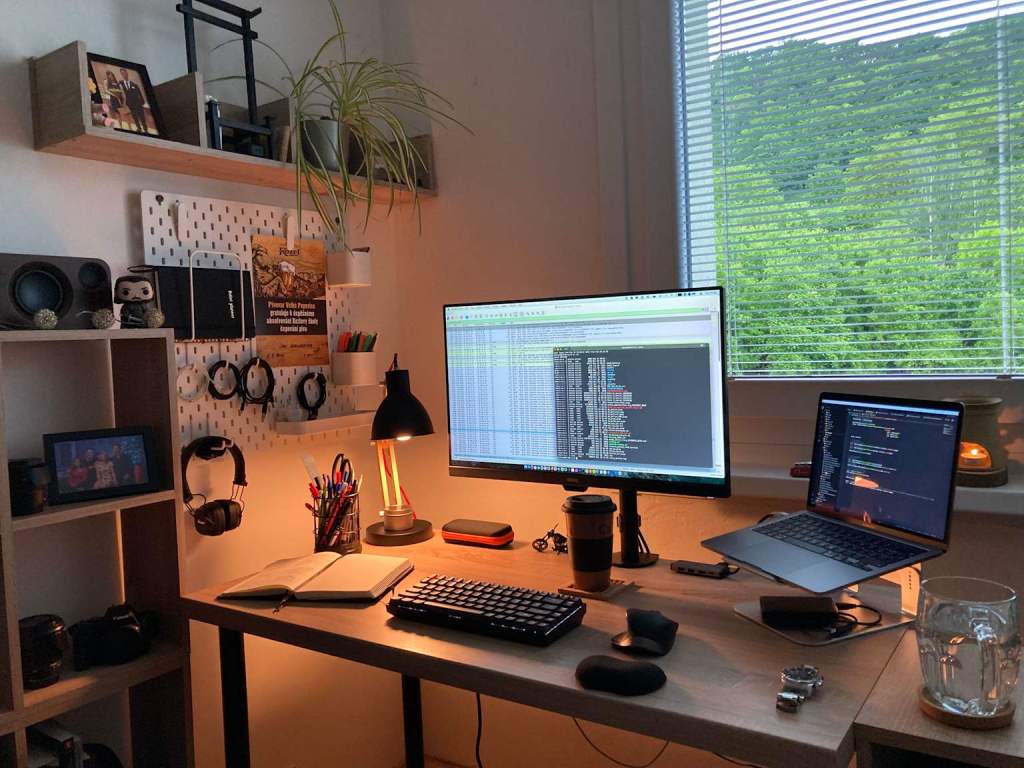
A cozy and organized urban home office setup with warm lighting and a view of greenery outside reddit
Optimize Your Workspace for Calm
Your home office should actively support mental wellness, not just productivity. Position your desk near natural light, incorporate plants, and ensure proper ergonomics to reduce physical stress. Keep your workspace organized and clutter-free to minimize cognitive load.
Research shows that 86% of full-time remote workers experience burnout, with 25% reporting daily stress compared to 16% of on-site workers. The solution isn’t returning to traditional offices but creating home environments that better support work-life integration.
Urban Living with Pets: Companionship and Calm
Pets provide powerful mental health benefits in urban environments, offering unconditional companionship and stress relief. Studies show that 86% of pet owners report positive impacts on their mental health, with benefits including reduced anxiety, lower stress hormones, and increased social connection.
Design Pet-Friendly Calm Spaces
Urban pets face their own stress from noise, limited outdoor access, and confined spaces. Create designated areas for feeding, sleeping, and play that remain consistent. Use washable, pet-safe materials to reduce maintenance stress while providing comfort for your animal companions.
Establish Routines That Benefit Everyone
Consistent daily routines for feeding, walking, and playtime benefit both pets and their owners. These predictable patterns provide structure in chaotic urban environments and ensure regular outdoor time that’s essential for mental health.
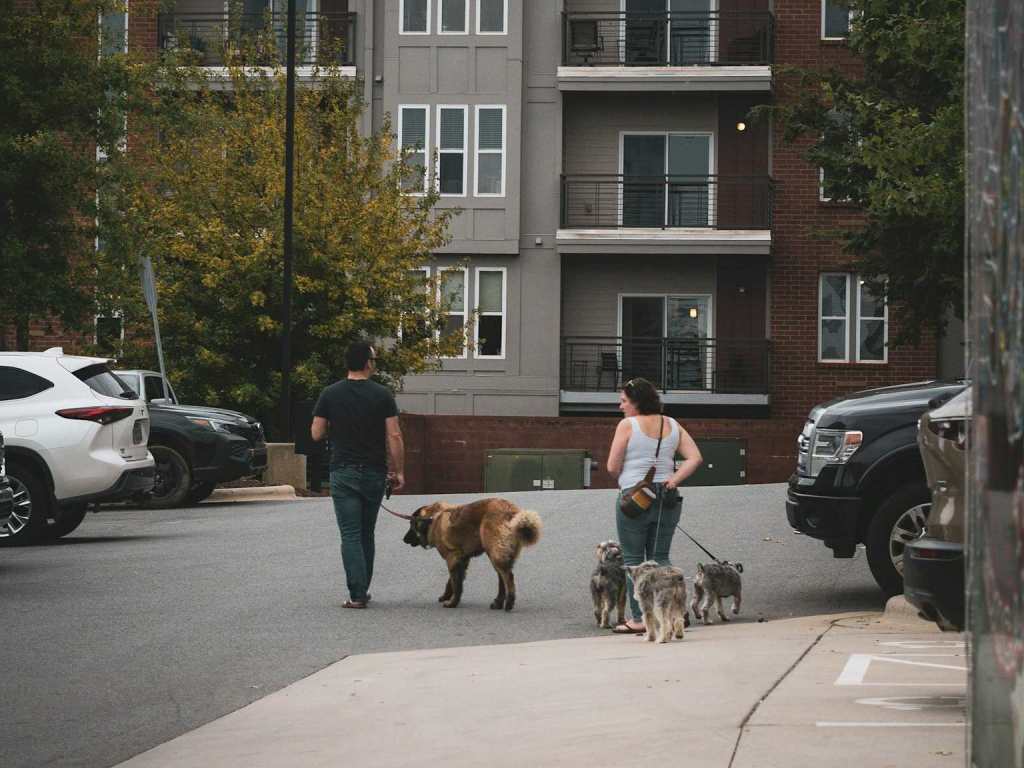
A couple walking multiple dogs in an urban residential area, illustrating pet companionship and outdoor activity in city living austin.culturemap
Address Urban Pet Stressors
City pets often experience anxiety from noise, crowds, and limited space. Provide quiet retreat areas where pets can escape household activity. Consider sound-dampening elements and maintain clean, organized pet areas to minimize stress for both animals and humans.
The presence of pets also encourages social interaction with neighbors and community members, helping combat the isolation common in urban environments. Regular dog walking provides natural opportunities for outdoor exercise and social connection.
Raising Children in the City: Creating Peaceful Family Spaces
Urban families face unique challenges in providing children with the space, quiet, and nature exposure traditionally associated with healthy development. However, thoughtful home design can create environments that support both children’s needs and family harmony.
Designate Clear Play and Quiet Zones
Children need both stimulating play areas and calm spaces for rest and reflection. Create defined boundaries using furniture placement or room dividers. Ensure quiet zones remain available for all family members to decompress from urban overstimulation.
Prioritize Outdoor Time and Nature Connection
Urban children often have limited access to natural environments, making regular outdoor time even more crucial. Incorporate daily walks, park visits, or balcony time into family routines. When indoors, use plants, natural materials, and nature-themed decor to maintain connection with the natural world.

A family enjoying a peaceful walk in an urban green space, highlighting the mental health benefits of nature for families with children bowenislandundercurrent
Use Soft Materials and Calming Colors
Urban families benefit from homes that actively counteract the hard surfaces and bright colors common in city environments. Choose soft, washable materials for high-use areas and incorporate calming color palettes that promote relaxation.
Establish Predictable Routines
Children thrive on predictability, which becomes even more important in unpredictable urban environments. Create consistent daily and weekly routines that provide security and help children develop coping skills for city life’s inherent chaos.
Research indicates that children raised in urban environments face increased risks for anxiety and behavioral challenges. However, families who actively create calm home environments and prioritize nature connection can significantly mitigate these effects.
Supporting Neurodivergent Sensitivities in Urban Homes
Urban environments can be particularly challenging for neurodivergent individuals, who may experience heightened sensitivity to noise, light, crowds, and unpredictable stimuli. Creating supportive home environments requires understanding these unique needs and designing spaces that provide sensory regulation and predictability.
Control Sensory Input
Neurodivergent individuals often struggle with sensory overload in urban environments. Install dimmable lighting throughout your home, use sound-absorbing materials like rugs and curtains, and provide soft textures for comfort. Consider noise-cancelling options for particularly sensitive individuals.
Create Predictable, Organized Systems
Uncertainty and disorganization can increase stress for neurodivergent people. Use clear labeling systems, maintain consistent furniture placement, and establish predictable routines. Visual cues and organization tools can significantly reduce daily stress and decision fatigue.
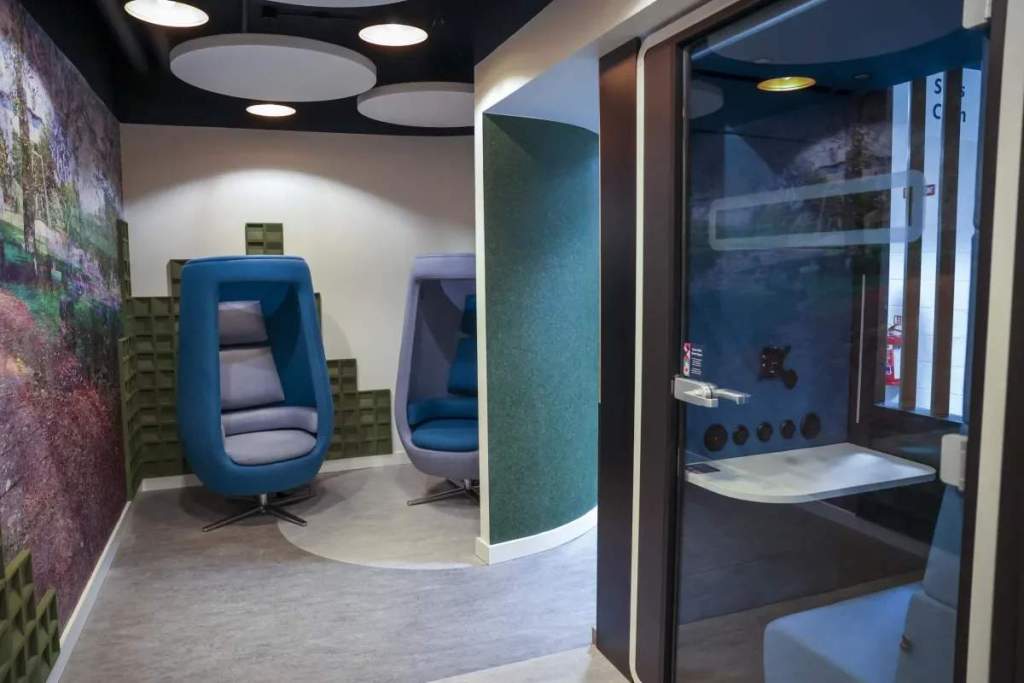
A sensory-friendly quiet space with ergonomic seating and sound-absorbing features designed to support neurodivergent individuals in urban environments dcu
Design Sensory Retreat Spaces
Every neurodivergent person needs access to calm spaces for sensory regulation. This might be a quiet corner with soft seating, a weighted blanket, and minimal visual stimulation. These retreat areas should remain consistently available and free from competing demands.
Accommodate Individual Differences
Neurodivergent sensitivities vary greatly between individuals. Some may be oversensitive to stimuli while others seek additional sensory input. Work with family members to understand their specific needs and create flexible environments that can accommodate different sensory preferences.
Studies show that neurodivergent individuals experience significantly higher stress levels in urban environments, with over 80% actively avoiding certain public spaces due to sensory overwhelm. Home environments that provide sensory regulation and predictability become crucial for mental health and daily functioning.
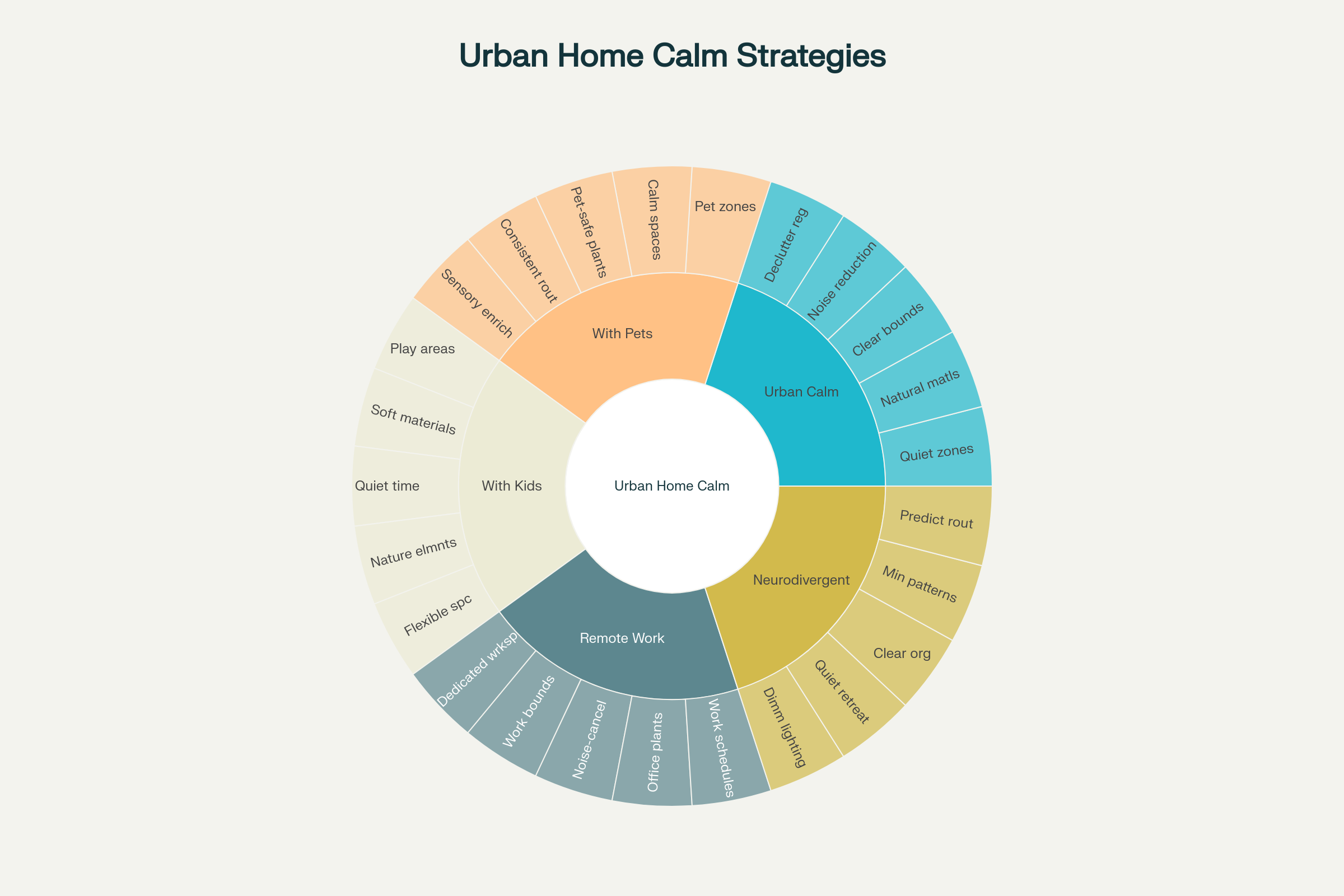
Urban Home Calm Strategies: A comprehensive guide to creating peaceful spaces in city living for different lifestyles and needs
Practical Implementation: Your Path Forward
Creating a calm urban home doesn’t happen overnight, but small changes can provide immediate benefits. Start with high-impact, low-cost interventions: add plants, establish quiet hours, create physical boundaries between work and relaxation areas, and develop consistent routines.
The key is recognizing that your home must actively counteract urban stress rather than simply providing shelter. Every design choice—from lighting to layout to daily routines—either supports or undermines your mental wellness.
Whether you’re managing remote work demands, caring for pets and children, or navigating neurodivergent sensitivities, the principles remain consistent: create predictability in an unpredictable environment, provide sensory regulation in an overstimulating world, and design spaces that support restoration rather than drain your mental resources.
Urban living doesn’t have to compromise your mental health. With intentional choices and evidence-based strategies, your city home can become the sanctuary you need to thrive in metropolitan life. The investment in creating calm spaces pays dividends in improved sleep, reduced stress, better relationships, and greater overall life satisfaction.
Remember that small changes create cumulative effects. Start where you are, use what you have, and gradually build the urban sanctuary that supports your unique needs and lifestyle. Your mental health—and that of your family—depends on creating these essential refuges within the concrete jungle.
- https://www.medicalnewstoday.com/articles/mental-health-living-in-a-city
- https://journalistsresource.org/economics/city-living-stress/
- https://pmc.ncbi.nlm.nih.gov/articles/PMC10220363/
- https://www.psychiatry.org/news-room/apa-blogs/city-living-and-mental-well-being
- https://sites.psu.edu/aspsy/2023/03/31/big-city-stress/
- https://pubmed.ncbi.nlm.nih.gov/27599349/
- https://pmc.ncbi.nlm.nih.gov/articles/PMC5374256/
- https://www.mcgill.ca/newsroom/channels/news/scientific-american-time-et-al-city-living-changes-brains-stress-response-175394
- https://pubmed.ncbi.nlm.nih.gov/37251474/
- https://www.nature.com/articles/s41591-023-02365-w
- https://www.cbc.ca/news/health/urban-stress-changes-brain-scans-show-1.1108482
- https://www.frontiersin.org/journals/public-health/articles/10.3389/fpubh.2024.1175109/full
- https://community.thriveglobal.com/city-living-impact-mental-health/
- https://thrivingcenterofpsych.com/blog/mental-health-effects-of-living-in-a-city/
- https://www.nature.com/articles/s41598-025-88349-x
- https://www.healthline.com/health/mental-health/living-in-a-city
- https://pmc.ncbi.nlm.nih.gov/articles/PMC10287556/
- https://pubmed.ncbi.nlm.nih.gov/23613211/
- https://www.vitalpsychmd.com/understanding-the-impact-of-urban-living-on-mental-health
- https://www.discovermagazine.com/mind/the-noise-and-pollution-of-a-city-could-impact-your-mental-health
- https://www.archdaily.com/1028000/urban-sanctuaries-creating-peaceful-homes-amidst-city-chaos
- https://www.bayut.com/mybayut/steps-create-peaceful-home-environment/
- https://www.youtube.com/watch?v=kqEsqHIWKgs&vl=en
- https://interiordesign.net/projects/15-simple-spaces-for-relaxing/
- https://www.youtube.com/watch?v=j_geevIpY-w
- https://www.archilovers.com/projects/278677/the-sanctuary.html
- https://urbanland.uli.org/planning-design/the-new-art-of-creating-calm-places
- https://nyweekly.com/feature/how-to-turn-your-home-into-a-peaceful-sanctuary/
- https://www.youtube.com/watch?v=EMoWkrg8o1c&vl=en-US
- https://theurbanmonk.com/practical-tips-for-creating-a-calm-and-peaceful-home-environment/
- https://lombardohomes.com/creating-a-peaceful-home-environment/
- https://olsonkundig.com/projects/urban-sanctuary/
- https://www.rent.com/blog/calm-aesthetic/
- https://zebracbd.com/blogs/cbd-health-wellness/peaceful-home
- https://www.pinterest.com/ideas/sanctuary-house/898490642701/
- https://vocal.media/lifehack/urban-oasis-transform-your-city-space-into-a-serene-sanctuary
- https://balancethroughsimplicity.com/how-to-create-a-calm-family-home/
- https://matpelbuilders.com/projects/urban-sanctuary/
- https://www.rent.com/blog/peaceful-home/
- https://lifeasahuman.com/2020/home-living/6-ideas-for-a-peaceful-home-environment/
- https://polkstreetah.com/news/mental-health-benefits-of-owning-pets
- https://www.bettercitiesforpets.com/resource/pet-friendly-housing/
- https://westwoodbridgepethospital.com/impact-of-environmental-stress-on-pet-health/
- https://habri.org/blog/how-pets-impact-our-mental-health/
- https://www.forrent.com/blog/apartment-hunting/best-pet-friendly-apartment-amenities/
- https://takespruce.com/cities-with-the-most-stressed-pets/
- https://newsinhealth.nih.gov/2018/02/power-pets
- https://sfstandard.com/2023/09/10/luxury-pet-apartment-san-francisco-perks-dog-owners/
- https://everydaytourist.ca/street-views/back-to-nature-the-healing-impact-of-green-spaces-and-pets-in-urban-areas
- https://www.psychologytoday.com/us/blog/canine-corner/202004/are-city-dogs-more-anxious-country-dogs
- https://www.apartments.com/blog/spectacular-pet-friendly-amenities-offered-by-apartment-communities
- https://www.uni-ulm.de/en/med/medical-faculty/news-detail/article/die-positive-wirkung-von-pfoten/
- https://pmc.ncbi.nlm.nih.gov/articles/PMC10902138/
- https://www.apartmentguide.com/blog/pet-friendly-apartment-guide/
- https://newatlas.com/biology/study-urban-dogs-more-fearful-rural-dogs/
- https://www.psychiatry.org/news-room/news-releases/positive-mental-health-impact-of-pets
- https://www.mckinley.com/blog/post/the-ultimate-guide-to-pet-friendly-apartment-living-tips-and-tricks/
- https://pubmed.ncbi.nlm.nih.gov/31100295/
- https://www.journee-mondiale.com/en/furry-therapists-how-pets-are-revolutionizing-mental-health-care/
- https://www.apartmentlist.com/renter-life/pamper-your-pup-with-these-great-apartment-pet-amenities
- https://today.duke.edu/2016/05/psychotic-symptoms-children
- https://nj1015.com/kids-are-stressed-out-anxious/
- https://www.theparentz.com/parenting/the-rise-of-urban-parenting-challenges-and-solutions
- https://news.wttw.com/2017/12/11/how-stress-and-anxiety-are-hurting-children
- https://www.searchhomelistings.ca/blog/Is-Raising-Children-In-The-City-Better-or-Worse
- https://pmc.ncbi.nlm.nih.gov/articles/PMC8721758/
- https://www.miracle-recreation.com/blog/how-playing-reduces-stress-and-anxiety/
- https://neurosciencenews.com/city-living-child-development-25393/
- https://publichealth.jhu.edu/2024/research-identifies-characteristics-of-cities-that-would-support-young-peoples-mental-health
- https://pmc.ncbi.nlm.nih.gov/articles/PMC9763895/
- https://ifstudies.org/blog/heres-to-urban-parenthood
- https://www.sciencedaily.com/releases/2016/05/160511210922.htm
- https://www.yalemedicine.org/conditions/childhood-stress-and-anxiety
- https://www.uts.edu.au/news/2023/12/city-living-can-pose-developmental-risks
- https://pure.eur.nl/ws/portalfiles/portal/47986095/REPUB_105524.pdf
- https://www.purdue.edu/hr/CHL/healthyboiler/news/newsletter/2021-3/kidsstress.php
- https://www.extraspace.com/blog/life-transitions/advantages-of-growing-up-in-a-big-city/
- https://kclpure.kcl.ac.uk/portal/en/publications/why-are-children-in-urban-neighbourhoods-at-increased-risk-for-ps
- https://www.apa.org/monitor/2022/10/child-anxiety-treatment
- https://www.brickunderground.com/rent/apartments-for-rent-work-from-home-amenities-offices-business-centers-luxury-nyc
- https://community.thriveglobal.com/causes-of-stress-in-remote-workplaces-and-how-to-deal-with-them/
- https://www.vitalpsychmd.com/managing-mental-health-when-working-from-home
- https://www.anyplace.com/rentals-for-remote-workers
- https://en.wikiversity.org/wiki/Motivation_and_emotion/Book/2024/Remote_work_and_stress
- https://thrivingcenterofpsych.com/blog/psychological-challenges-with-remote-working/
- https://www.thewalcottjeffersonville.com/blog/2025/01/29/why-luxury-apartments-are-perfect-for-work-from-home-living/
- https://www.youtube.com/watch?v=hrjcjA8VCas
- https://www.rent.com/blog/apartment-work-from-home-trends/
- https://psychology.iresearchnet.com/health-psychology-research/workplace-stress-health/remote-work-and-stress-new-challenges/
- https://www.connexontario.ca/en-ca/resource-hub/entryid/39/the-impact-of-remote-work-on-mental-health-an-in-depth-analysis
- https://www.anyplace.com/work-from-anywhere
- https://www.zippia.com/advice/remote-work-burnout-statistics/
- https://www.ocdanxietycenters.com/mesa-arizona/remote-work-anxiety-the-hidden-mental-health-crisis/
- https://www.anyplace.com/home-away-from-home
- https://qz.com/work/1641664/remote-workers-are-the-solution-to-urban-crowding?src=remotework.FYI
- https://www.aplaceofhope.com/mental-health-implications-of-remote-work-navigating-the-new-normal/
- https://www.camdenliving.com/blog/setting-up-a-work-from-home-office-in-your-apartment
- https://multimodaladventures.substack.com/p/neurodiversity-in-urbanism
- https://www.rula.com/blog/autism-stress/
- https://rca-media2.rca.ac.uk/documents/Streets_for_Diversity_final.pdf
- https://www.weforum.org/stories/2024/04/neurodiversity-sustainable-urban-planning/
- https://www.thetreetop.com/aba-therapy/can-autism-get-worse-with-stress
- https://www.weforum.org/stories/2024/04/biophilic-design-benefits-neurodivergent-people/
- https://www.prp-co.uk/news/designing-for-diversity-neurodiversity-urban-spaces/
- https://www.reddit.com/r/AutismInWomen/comments/14ptvw0/are_yall_able_to_live_in_big_cities/
- https://www.totalcareaba.com/autism/autism-friendly-environments-with-smart-energy-tech
- https://lifestyle.sustainability-directory.com/term/neurodiversity-and-urbanism/
- https://pmc.ncbi.nlm.nih.gov/articles/PMC9545671/
- https://rgs-ibg.onlinelibrary.wiley.com/doi/10.1111/area.12803
- https://www.linkedin.com/pulse/designing-cities-everyone-what-neurodivergent-people-wish-codrington-6fkbc
- https://www.frontiersin.org/journals/neuroscience/articles/10.3389/fnins.2021.756628/full
- https://www.designtrust.org/projects/neurodiverse-city/
- https://blog.westminster.ac.uk/wp-content/uploads/sites/131/2023/04/CITIES-OF-NEURODIVERSITY_17April2023_DrThereseKenna.pdf
- https://neurodivergentinsights.com/autism-and-adhd-burnout/
- https://www.neurodiversityhub.org/enabling-spaces-2
- https://theprint.in/world/neurodiversity-can-drive-sustainable-urban-planning-heres-how/2039435/
- https://doaj.org/article/71d0f35ad80a4ce189623f861662588d
 Punk Rabbit Urban Cleaning & Pet Care Services
Leave a comment